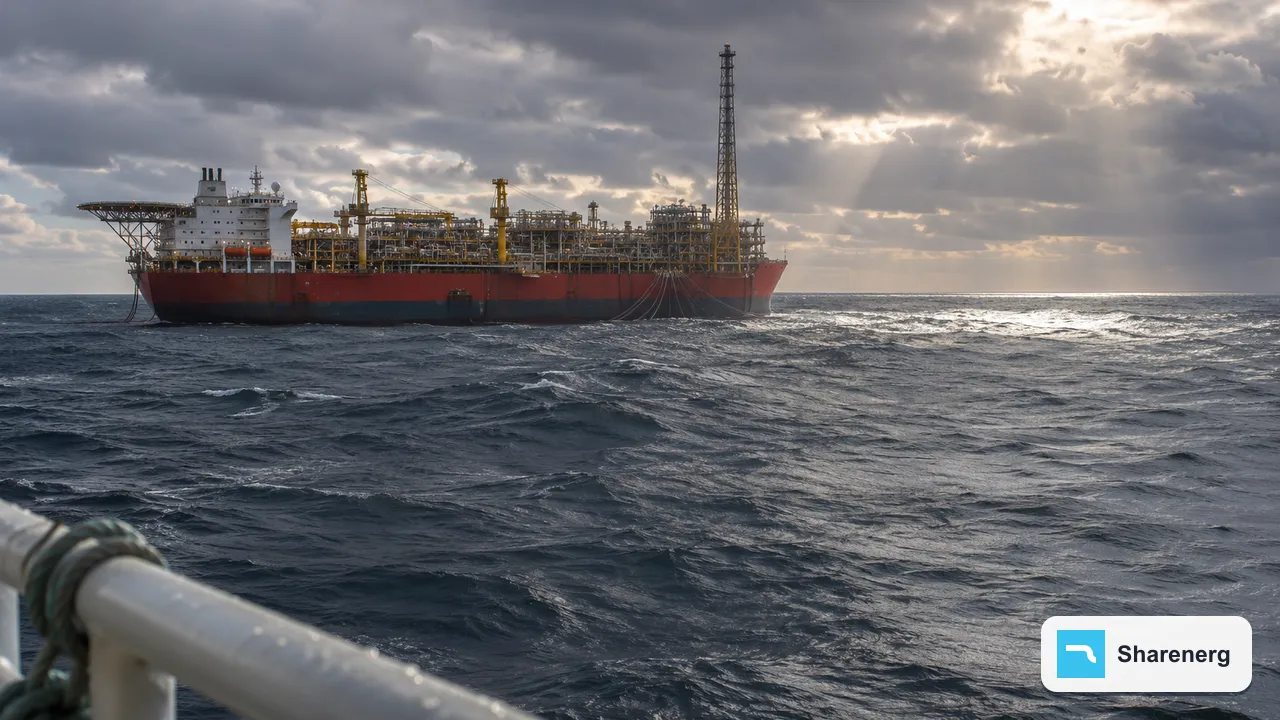
The government approved Shell's Jackdaw gas field on 21 October 2026, while a decision on the much larger Rosebank oil field is still awaited. Both projects had to go back through environmental assessment because the courts ruled that the emissions from burning the extracted oil and gas, known as scope 3 emissions, must be considered. That change now applies to every new offshore field development, and it affects how subsea pipelines, tiebacks and export routes are justified in an environmental statement.
How we got here
The turning point was a Supreme Court judgment in June 2024 about an onshore oil drilling project in Surrey, usually called the Finch case. The court concluded that an environmental impact assessment (EIA) for new fossil fuel extraction must assess the emissions from combustion of the product, not only the emissions from extracting it.
Rosebank, west of Shetland, had been approved in 2023, and Jackdaw, in the central North Sea, in 2022. Greenpeace, joined by Uplift on Rosebank, challenged both consents in the Scottish courts. In January 2025 the consents were ruled unlawful. The Institute for Government's explainer notes that the judge suspended the quashing orders so that work could continue while new decisions were taken, and that the government did not contest the challenges.
The developers then provided new information. Additional scope 3 information for Rosebank was submitted in July 2025, and Shell submitted a new EIA for Jackdaw in September 2025. Government also consulted on revised guidance setting out how scope 3 should be handled in offshore EIAs.
The 2026 consultations and the Jackdaw decision
In summer 2026 the Offshore Petroleum Regulator for Environment and Decommissioning (OPRED) ran public consultations on the further information for both fields. DrillOrDrop reported that the Rosebank consultation ran until 17 August 2026, under reference ES/2022/001, and that the Jackdaw consultation closed on 10 August. The same report described Rosebank as holding more than 480 million barrels of oil, with Adura, the Shell and Equinor joint venture, holding 80% and Ithaca Energy 20%. It also cited campaigners' estimate of lifetime emissions of 254 million tonnes of CO2 equivalent.
On 21 October 2026, Energy Secretary Miatta Fahnbulleh announced consent for Jackdaw. The announcement also set up an Energy Wealth Fund with an initial £2 billion to support investment in renewable and low-carbon energy. Rosebank remains undecided, and the decision will rest on the revised EIA.
What scope 3 assessment changes in practice
For engineers, the legal arguments matter less than the practical effect on a field development plan and its environmental statement. Four changes stand out.
The assessment boundary is wider
An offshore EIA traditionally covered the physical footprint and operational emissions: drilling, installation of the subsea system and pipelines, flaring, venting, power generation and discharges. Scope 3 adds downstream combustion, which for most oil and gas fields dwarfs everything else. That changes the scale of the emissions conversation, even though the engineering scope is unchanged.
Production profiles carry more weight
Scope 3 estimates are driven by the volumes produced over field life. The production forecast, plateau rate and field life in the development plan therefore feed directly into a headline environmental number. Assumptions about tiebacks, future phases and late-life extensions now have a visible emissions consequence.
Operational emissions still count
Scope 1 and 2 emissions from the facilities remain part of the assessment, and they are the part engineers can influence most. Electrification from shore or from a nearby platform, minimising flaring, reducing methane venting and selecting efficient compression all reduce the operational footprint. Pipeline choices also play a part: a longer tieback to an existing hub may avoid a new floating facility with its own generation.
Timelines are longer and less certain
Rosebank and Jackdaw show what happens when consent is reopened mid-project. Work on both fields continued while the quashing orders were suspended, and the DrillOrDrop report notes possible delays to Rosebank production after equipment was dropped into the sea in April 2026. Contractors and supply chain planners now have to treat consent as a schedule risk even after an initial approval.
Where pipelines fit in
Field development decisions run through the subsea and pipeline design. Some examples:
- Export route. Whether a field exports oil by tanker or pipeline, and gas through an existing trunkline or a new line, affects both installation emissions and long-term operations. Route optimisation, discussed in our article on GIS-led route selection, is equally relevant offshore.
- Tieback distance. Long tiebacks reduce new infrastructure but raise flow assurance challenges that may need heating, insulation or chemical injection, each with its own energy demand.
- Installation footprint. Rock placement, trenching and vessel time all appear in the scope 1 and 3 inventory of the construction phase, and on-bottom stability design shapes how much intervention is needed. See our piece on on-bottom stability.
- Future reuse. Pipelines designed with later CO2 or hydrogen service in mind may count in a project's favour in the wider energy transition argument, even if they do not change the scope 3 figure.
None of this changes the physics of pipeline design. It does change the story a design has to tell, and the documentation that goes with it, so engineering and environmental teams need to work together from concept selection onwards.
What to watch next
The Rosebank decision is the obvious milestone. Beyond that, the revised scope 3 guidance will shape how every new field, and some extensions of existing ones, presents its environmental case. How the regulator weighs downstream emissions against energy security arguments in the Rosebank decision will be read closely by every operator with a field in development.
For project teams, the safest assumption is that environmental assessment now needs earlier and more detailed emissions work, and that engineering choices that reduce operational emissions are worth documenting clearly. Specialist environmental and legal advice remains essential on any live application.