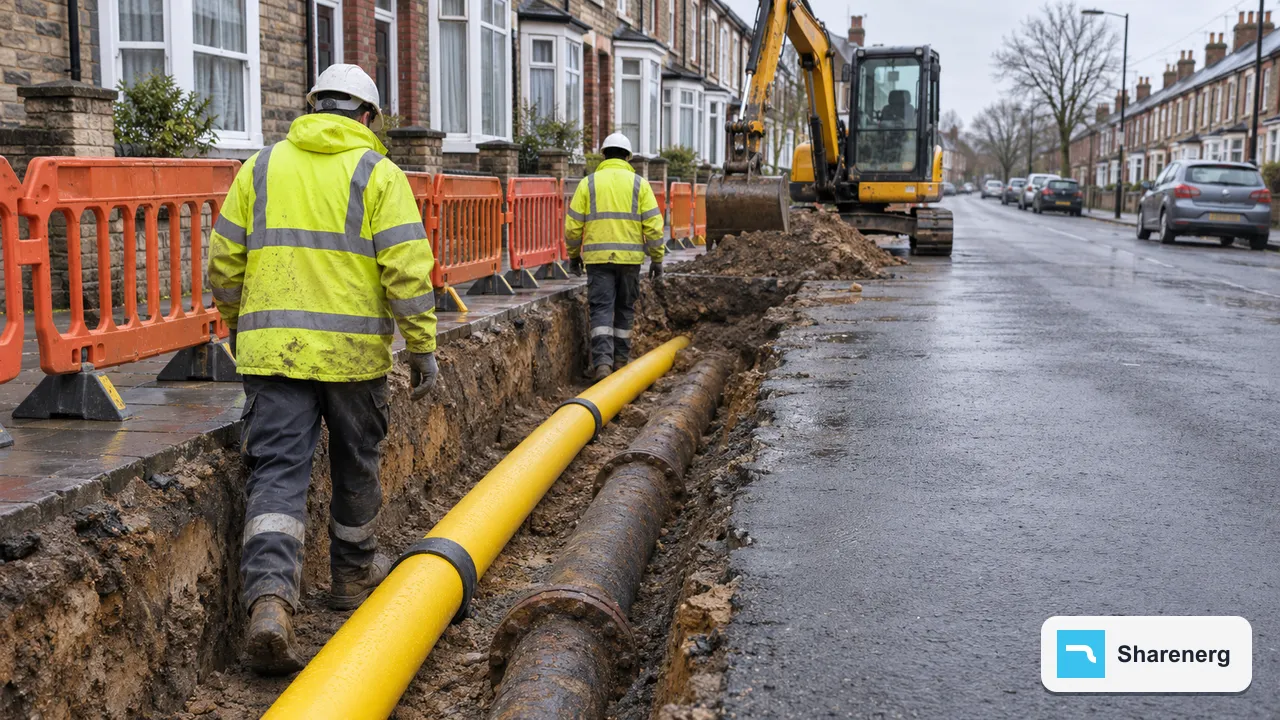
RIIO-3 is Ofgem's price control for Britain's gas transmission, gas distribution and electricity transmission networks, running from 1 April 2026 to 31 March 2031. Ofgem's final determinations, published on 4 December 2025, allowed £17.8 billion of initial investment for the gas networks out of a £28 billion headline total. For anyone working on pipelines, the control decides which projects get funded, how efficiently they must be delivered and how risks are shared with bill payers.
The decision at a glance
Ofgem's decision page confirms that RIIO-3 replaces the RIIO-2 controls that ended on 31 March 2026 and lasts five years. The accompanying press release split the initial investment as follows:
- Gas networks: £17.8 billion, which Ofgem said was mostly to maintain Britain's gas networks as among the safest, most secure and resilient in the world.
- Electricity transmission: £10.3 billion.
Ofgem expects total investment could reach around £90 billion by 2031 as further projects are approved during the period. For a typical dual fuel household it estimated that £108 will be added to bills by 2031, £48 for gas and £60 for electricity, with a net increase of around £30 once savings from grid expansion are counted.
Who is covered on the gas side
Gas transmission is National Gas Transmission, which owns and operates the high-pressure National Transmission System. Gas distribution covers four companies: Cadent, Northern Gas Networks, SGN and Wales & West Utilities. Between them they run the medium and low-pressure networks that deliver gas to homes and businesses. Each company has its own set of final determinations with allowances for its specific plans.
How the money is controlled
Understanding RIIO is mostly about understanding the mechanisms rather than the headline figure. A summary by Ashurst highlights several that matter to engineering teams.
Totex and the sharing factor
Companies receive an allowance for total expenditure, combining capital and operating spend. If they deliver for less, they keep part of the saving; if they overspend, they bear part of the cost. Ofgem put the upfront totex across all sectors at £28.1 billion, 16% more than in its draft determinations.
Ongoing efficiency
Baseline allowances include an efficiency challenge of 1% a year, compared with 1.2% in RIIO-2. In practice, engineering teams are expected to find productivity gains through better planning, procurement and technology.
Uncertainty mechanisms
Not everything can be forecast five years ahead. Uncertainty mechanisms let Ofgem adjust allowances when costs become clearer, for example when a project reaches the right stage of development. This is how major new projects can be funded mid-period rather than having to wait for the next control.
Price control deliverables
Where funding is tied to a specific output, such as a defined asset replacement, Ofgem can claw money back if it is not delivered. That puts a premium on clear scope definition and good records of completed work.
Returns
Ofgem set the allowed return on equity for gas transmission at 6.12% and the weighted average cost of capital for gas transmission and distribution at 5.24%, up from 2.81% in RIIO-2. Higher interest rates were one reason for the rise.
What this means for pipeline work
The determination documents for each company list the specific programmes funded, and engineers working for the networks or their supply chains will want to read the ones relevant to them. Some general themes for pipelines:
- Asset health. Much of the gas allowance is about keeping existing assets safe and reliable: pipelines, compressors, valves, above-ground installations and the control systems that run them. Inspection data is central to justifying that spend, and our article on digital twins and in-line inspection shows how operators use it.
- Resilience and security. Ofgem framed the gas funding around safety, security and resilience. For transmission that means keeping entry points, compressors and critical crossings available on the days when demand peaks.
- Distribution mains. Distribution company plans include replacement of older pipes and maintenance of local networks. The detail varies between the four companies, so check the relevant determination.
- Future networks. Funding for hydrogen development work comes through specific decisions. Ofgem confirmed £164 million for three National Gas projects in November 2025, including the East Coast hydrogen pipeline described in our article on Project Union: East Coast.
What engineers can do to support funding cases
Price control funding is won or lost on evidence. Engineering teams influence that directly. Clear condition data, consistent asset registers, well-documented risk assessments and realistic unit costs all make it easier for a network company to justify an allowance or a mid-period adjustment. Equally, poor records of what was installed, inspected or replaced can leave a company exposed when Ofgem checks whether deliverables were met. For contractors, understanding which outputs a project is tied to helps explain why clients ask for particular reporting and close-out documentation.
A changing role for gas networks
RIIO-3 is the first control set against a clear expectation that gas demand will fall over the long term, even though gas remains critical on cold, still days. That raises questions engineers will meet throughout the period: how much to invest in assets that may carry less gas in 20 years, which lines are candidates for hydrogen or CO2 service, and how to avoid stranded costs falling on a shrinking customer base.
Those questions do not have single answers, but they shape which projects get approved and how they are justified. Investment cases that show flexibility, such as designing replacements so they could later be repurposed for hydrogen, may be easier to defend.
Key dates during RIIO-3
The new licences took effect on 1 April 2026. Companies can appeal elements of the final determinations to the Competition and Markets Authority within a fixed window after Ofgem's licence decision. During the five years, Ofgem will publish annual performance reports and make further funding decisions through the uncertainty mechanisms. Anyone tracking a particular programme should follow the company's regulatory reporting as well as Ofgem's announcements.